
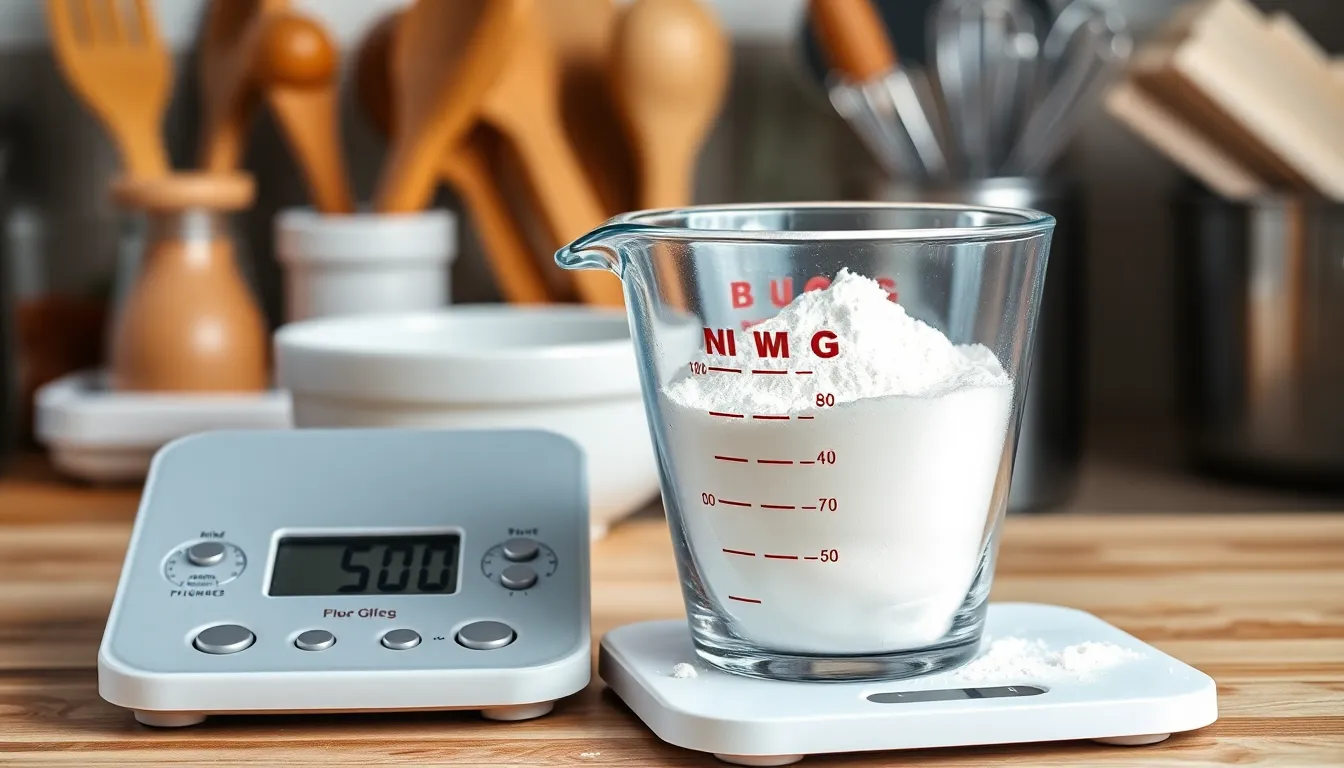
When it comes to cooking and baking, precise measurements can make all the difference. Converting grams to cups is a common challenge for many home cooks and professional chefs alike. Understanding how many cups are in 500 grams can simplify recipes and ensure consistent results every time.
The conversion isn’t always straightforward, as it depends on the ingredient being measured. For example, 500 grams of flour weighs differently than 500 grams of sugar. This article will break down the conversion process and provide helpful tips to navigate these measurements with ease. Whether you’re whipping up a batch of cookies or preparing a savory dish, knowing how to convert grams to cups can elevate your culinary skills.
Understanding Measurement Conversions
Precise measurements play a vital role in achieving successful results in cooking and baking. Understanding how to convert grams to cups aids both home cooks and professional chefs in their culinary endeavors.
The Importance of Accurate Measurements
Accurate measurements ensure consistent outcomes in recipes. Variations, even small ones, can significantly affect texture and flavor. For example, 500 grams of flour yields distinct results compared to 500 grams of sugar, impacting the final product. By using precise conversions, cooks minimize guesswork, leading to better culinary experiences.
Common Conversions for Baking and Cooking
Conversion rates vary by ingredient due to differences in density. Below are typical conversions for common ingredients:
| Ingredient | 500 Grams (g) | Cups |
|---|---|---|
| All-Purpose Flour | 500 g | 4 cups |
| Granulated Sugar | 500 g | 2.5 cups |
| Brown Sugar (packed) | 500 g | 2.25 cups |
| Butter | 500 g | 2.25 cups |
| Honey | 500 g | 1.75 cups |
| Milk | 500 g | 2 cups |
These conversions serve as a guide for cooks to achieve accurate measurements, tailoring recipes to their needs while maintaining quality.
How Many Cups Is 500 G?
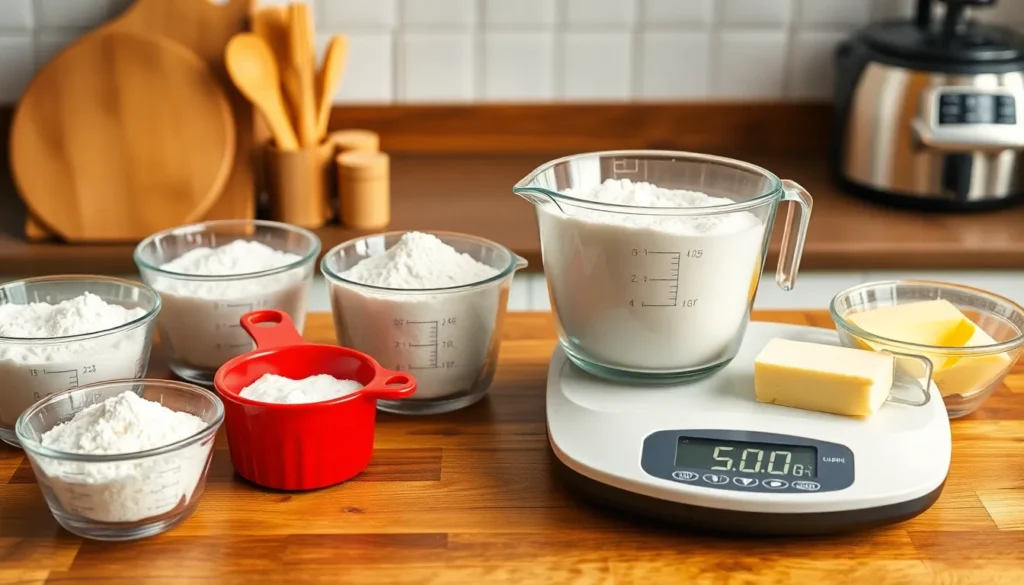
Understanding the conversion of 500 grams to cups requires awareness of the ingredient type. Grams measure weight, while cups measure volume, making conversions vary across different ingredients.
Dry Ingredients vs. Liquid Ingredients
Dry ingredients typically have different densities than liquid ingredients. For example, 500 grams of all-purpose flour equates to approximately 4 cups, while 500 grams of granulated sugar equals about 2.5 cups. Liquid ingredients like water measure differently, where 500 grams corresponds to roughly 2 cups. Recognizing the difference in measurement types helps ensure precision in recipes.
Variations by Ingredient Type
Ingredient type significantly affects the conversion rate from grams to cups. Common conversions include:
| Ingredient | Grams (500 g) | Cups Approx. |
|---|---|---|
| All-Purpose Flour | 500 g | 4 cups |
| Granulated Sugar | 500 g | 2.5 cups |
| Brown Sugar | 500 g | 2.25 cups |
| Butter | 500 g | 2.25 cups |
| Water | 500 g | 2 cups |
These conversions serve as guidelines for both home cooks and professional chefs, enabling accuracy in recipe preparation.
Tools for Measurement
Accurate measurement tools are essential for converting grams to cups effectively. They ensure precision, helping cooks achieve consistent results across various recipes.
Using a Kitchen Scale
A kitchen scale offers the most accurate method for measuring ingredients by weight. It measures grams directly and can handle various ingredients like flour and sugar with precision. To use a kitchen scale, zero the scale with a container on it before adding the ingredient. This tare function simplifies the process and avoids calculation errors. Many professional chefs utilize this method for its reliability, significantly enhancing the quality of their dishes.
Measuring Cups and Spoons
Measuring cups and spoons provide a convenient method for gauging volume. While these tools are effective for liquid ingredients, dry ingredients require careful attention to ensure an accurate fill. To measure accurately, fill the cup or spoon without packing the ingredient down and level it off with a straight edge. Different materials, such as plastic or metal, may impact precision, so it’s advisable to use dedicated sets for measuring. Cooks often find it helpful to reference conversion charts, especially when switching between weight and volume measurements.
Practical Tips for Accurate Measurements
Accurate measurements are crucial in recipe success. Following specific techniques for different ingredients helps ensure reliability in cooking and baking.
How to Measure Flour Correctly
Measuring flour requires careful attention to avoid excess weight. Use the following steps for accuracy:
- Scoop the Flour: Use a spoon to aerate the flour directly from the container into a measuring cup without packing it down.
- Fill the Cup: Spoon the flour into the measuring cup until it’s heaped above the rim.
- Level Off the Excess: Use a straight edge, like a knife, to scrape off the excess flour, ensuring a flat top.
- Weigh for Precision: For exact measurements, use a kitchen scale; 500 grams of all-purpose flour equals approximately 4 cups.
Tips for Measuring Sugar
- Scoop with a Spoon: Similar to flour, gently spoon granulated sugar into your measuring cup to prevent packing.
- Overflow Technique: Fill the cup slightly above the rim, creating an overflow.
- Level the Sugar: Use a straight edge to remove any excess, achieving a level measure.
- Account for Variations: Know that 500 grams of granulated sugar translates to about 2.5 cups; always weigh for more accuracy, especially with other sugar types like brown sugar.

